The focal length is probably the most intuitive photography parameter to explain. It is simply what is known as zoom. Although not intuitive, this parameter is measured in millimeters (mm).
Where do I find it in my viewfinder?
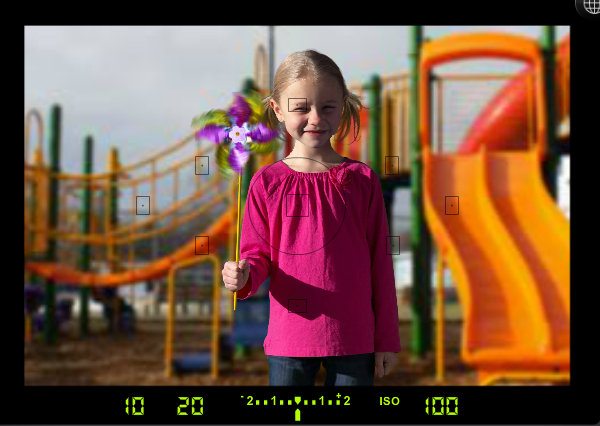
DSLR cameras have a viewfinder through which you can set up your shoot, and view the scene at the same time. It should look something as the image below.

The viewfinder shows many parameters of shooting: exposure time, F number, exposure, ISO level, focus point. These are explained in my other posts. However, in most of the DSLR cameras the focal length is not shown numerically: you can just observe the obvious effects of it on the scene you capture.
Reference values
- A 18mm focal length setting provides a field of view which is wide. It allows to capture a larger part of the scene without stepping back, as if you had zoomed out. See the image below as an example.
- In the other hand, a 55mm focal length setting allows you capture a narrower part of the scene, as if you had zoomed in. This focal length setting is similar to the human perception. See the image below as an example.
- A 200mm focal length setting would provide an even narrower field of view, capturing a very limited part of the scene. To have an idea, 200mm is equivalent to a 4x zoom (zoom in).
Focal length range
One of the properties of lenses is their focal length range. Lenses sold with the body of the camera usually have the focal length range that goes from 18mm to 55mm. This means you can zoom in/out on the fly by just turning a lens ring. Compact cameras also have a wide focal length range too.
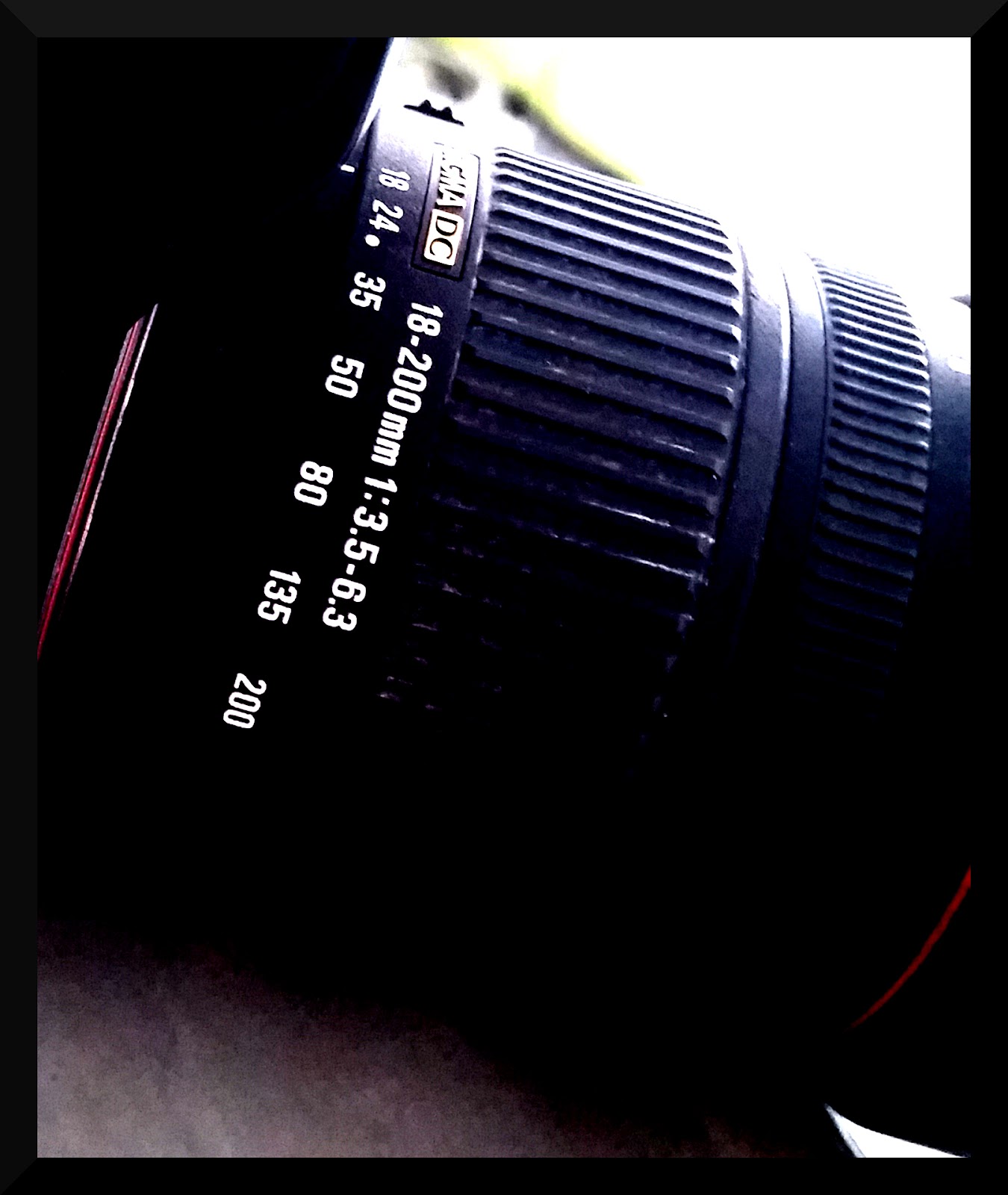
The image below shows a lens with a 18-200mm focal length range.
Fixed focal length lenses
There are some lenses with fixed focal length. Why would someone buy such lenses? Well, there are many reasons. First of all, lenses' prices are very related to the amount of glass they contain. Prime lenses, i.e. the ones with fixed focal length, have less glass elements, so are usually cheaper. Also they are lighter, and smaller, so more convenient to travel. As they have less glass elements, they keep better the properties of the image too, so pictures have better quality. Also, prime lenses allow bigger apertures, which allows to take pictures in low light conditions, and movement conditions (like car racing shots, for instance). On the other hand, this kind of lenses lack of zoom, which makes you move your legs to get a nice perspective (I consider this also a good point though).
Play with it!
I strongly recommend you to play a bit. Put your camera in automatic mode an experiment with this setting, find differences when using 18mm, 30mm, and 55mm. Get familiar with the numbers, they will become very handy when discussing with other people.
If you don't have your camera with you, you can use some fantastic online simulators. The one I recommend is CameraSim. Play with the different focal lengths and get familiar with their effects on the scene captured.
What is next?
You should learn now about: Exposure value

No comments:
Post a Comment